

Qualiteers Training Portfolio

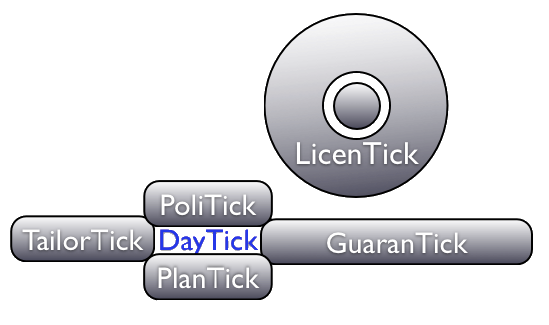
The best, and currently the only, way for software developers to learn Tick-the-Code is a thorough immersion into it called DayTick. The three-hour course called QuickTick is still included here, but only for historical reasons. It was the way Qualiteers started. After 53 QuickTick sessions it deserves a peaceful retirement.
You can include managers by supplementing the courses with a planning session (PlanTick) or a management information session (PoliTick).

DayTick - immerse yourself in code for a day

The DayTick option enables the participants to use the Tick-the-Code rule cards in their work. It also emphasizes a quality attitude. Several rules and plenty of theory are covered. We also measure the checking performance of the participants both before and after the course. That way everybody can see the improvement for themselves.

If investing a whole day for a training seems too much, think again. With a focused training day, you can show you're willing to invest more than the absolute minimum for quality. You can send the right message. You can show that you as a manager have the Quality Attitude already.

Target Audience

The training course is aimed at anybody producing software source code. Beginners, seasoned programmers and gurus alike can benefit from the courses.

Objective

The participants learn how to check software source code in an efficient and effective way, which enables them to use it regularly, i.e. to make it into a habit with ever growing gains.
The participants should leave the course more quality-conscious than they came.

Prerequisites

The participants should be familiar with a programming language (the rules are guaranteed to work with C/C++/Java/C# code). Many other languages have been tried and as long as it is a language using text statements most of the rules will work. Languages like Python, Perl, Visual Basic and Haskell have been used in the training sessions.

Duration

The course lasts for one whole day (7h + lunch break).

Class Size

Max size is 10 participants.

Trainer

The course trainer is Miska Hiltunen.

Language

The course is held in English, Finnish or German.

Location

The training course is held in-house.

Material

All participants get to keep

  • 4 rule cards containing 24 rules,
  • a summary card and
  • a "Commitment to Quality" certificate.

Contents

Introduction

Checking Technique

  • The participants learn to tick by ticking for real.
  • They get to practice on 15 rules.
  • The production code improves once the ticks are removed after the course.

Topics

  • The Vicious Circle of Busyness: How time or the lack of it affects quality?
  • Dilemma of Quality: How to make sustainable improvements?
  • Paradigm Switch: Still Wanna Shoot a Bear?
  • Happiness and Other Feelings in Software Development: Why do I feel anxious or bored at work?
  • No Causality: Software IS Different (Boris Beizer)
  • Quality Attitude: How to Ensure Quality in Practice?
  • Measure the Improvement: How much better do you check afterwards?
  • Ideal Development Week: How often should you check?
  • Checking Method Comparison: Just-changes, walkthroughs and spec checks

Optionally, time permitting

  • The Principles behind the Rules
  • Errors and Freedom of Choice
  • Measuring Software: Standardize the Checking
  • All That's Urgent Isn't Important

Note! QuickTick no longer offered!

QuickTick training is no longer on offer. It has been completely replaced by DayTick. Quality takes time and a day is not too much to use for learning a new technique and assume a new attitude towards quality.

QuickTick - the fastest Tick-the-Code training there is

The QuickTick training course option enables the participants to use Tick-the-Code in their work. QuickTick is the absolute minimum in teaching ticking. With it the participants learn the technique. If you want them to understand why, and possibly learn to strive for quality when nobody's looking, choose DayTick.

Target Audience

The training course is aimed at anybody producing software source code. Beginners, seasoned programmers and gurus alike can benefit from the courses.

Objective

The participants learn how to check software source code in an efficient and effective way, which enables them to use it regularly, i.e. to make it into a habit with ever growing gains.

Prerequisites

The participants should be familiar with a programming language (the rules are guaranteed to work with C/C++/Java/C# code).

Duration

The course lasts for 3h.
This allows there to be even two groups in a day.

Class Size

Max size is 10 participants.

Trainer

The course trainer is Miska Hiltunen.

Language

The course is held in English, Finnish or German.

Location

The training course is held in-house.

Material

All participants get to keep

  • 4 rule cards containing 24 rules,
  • a summary card and
  • a "Commitment to Quality" certificate.

Comment

Contents

Introduction

Checking Technique

  • The participants learn to tick by ticking for real.
  • They get to practice on 8-10 rules.
  • The production code improves once the ticks are removed after the course.

Topics

  • The Vicious Circle of Busyness: How time or the lack of it affects quality?
  • Dilemma of Quality: How to make sustainable improvements?
  • Paradigm Switch: Still Wanna Shoot a Bear?
  • Happiness and Other Feelings in Software Development: Why do I feel anxious or bored at work?
  • No Causality: Software IS Different (Boris Beizer)
  • Quality Attitude: How to Ensure Quality in Practice?

How Will Tick-the-Code Fit to Your Organization?

In Tick-the-Code Inspection the participants check vast amounts of code in a relatively short time. Yet they check properly. Each tick in the source code is a possible improvement and a typical Tick-the-Code training produces tens of ticks.

Tick-the-Code as a procedure doesn't require support or adjusting of the other processes in the organization. At its simplest it is as personal as breathing. Tick-the-Code is pragmatic and makes sense; it helps in the busy day-to-day life of a software developer to keep quality up at all times. Because it makes sense, the urge to do it comes from within the developer. It doesn't need to be controlled or forced on the developers. Once the error count starts dropping, you might notice you can ease up on testing or use your testing staff better.

The training is practical and makes the participants check real production code. The findings are valuable and taking care of them will probably pay back the costs of training!

In addition to the practical checking technique, the participants learn about the Way of Quality, a special kind of attitude emphasizing quality in everything they do. As a reminder they receive a certificate to hang on their wall.

Extension Modules

Supplement the above-mentioned training courses with the following extension modules to include management in the improvement.

PoliTick - Inform the management about Tick-the-Code

PoliTick is aimed at the management who didn't participate in the Tick-the-Code training course. This module informs the managers about Tick-the-Code and tells them how they best support their subordinates in their striving for improved quality.

Target Audience

The session is aimed at software managers who don't know Tick-the-Code but whose people do.

Objective

The course gives enough information to the participants to understand what Tick-the-Code as a skill means. After the course, the participants are in a better position to support the Tick-the-Code experts.

Prerequisites

The participants should not be familiar with Tick-the-Code.

Duration

Depending on the conversation and questions, up to 2 hours.

Class Size

There is no restriction.

Moderator

Miska Hiltunen moderates the session.

Language

The session language will be English, Finnish or German.

Location

The session takes place in-house.

Contents

  • Vicious Circle of Busyness
  • Tick-the-Code: Summary
  • Rules
  • Feelings, Challenge and Skills
  • Comparison of Checking Methods
  • Management responsibility
  • Results
  • The 7 Habits of Highly Effective People
  • All that's Urgent isn't Important
  • Open conversation

PlanTick - Ensure successful deployment of Tick-the-Code

The goal of the organization is to make sure that all the participants can start using Tick-the-Code in their work and turn it into a regular habit. The circumstances are different in each organization. In this extension module the management plans the deployment with the trainer. The session answers questions like, how the managers can support their subordinates in using Tick-the-Code, how that support should manifest itself, and do you need written guidelines? In short, PlanTick helps deploy Tick-the-Code.

Target Audience

The session should include the right software managers and developers to make an effective deployment plan.

Objective

The participants create a practical and feasible plan on how to deploy Tick-the-Code in the organization. See Content for more information.

Prerequisites

The participants should be familiar with Tick-the-Code (having participated either PoliTick, DayTick or QuickTick).

Duration

Depending on the conversation and questions, up to 2 hours.

Class Size

Effective planning meetings have less than 6 participants.

Moderator

Miska Hiltunen moderates the session.

Language

The session language will be English, Finnish or German.

Location

The session takes place in-house.

Contents

At least the following subjects need to be covered in the session:

  • Practical arrangements (printing, distribution, metrics)
  • Key persons
  • Ticking period
  • Reporting (presenting results, collecting them on www.tick-the-code.com)
  • Incentive system